

A national food business, built farm by farm.
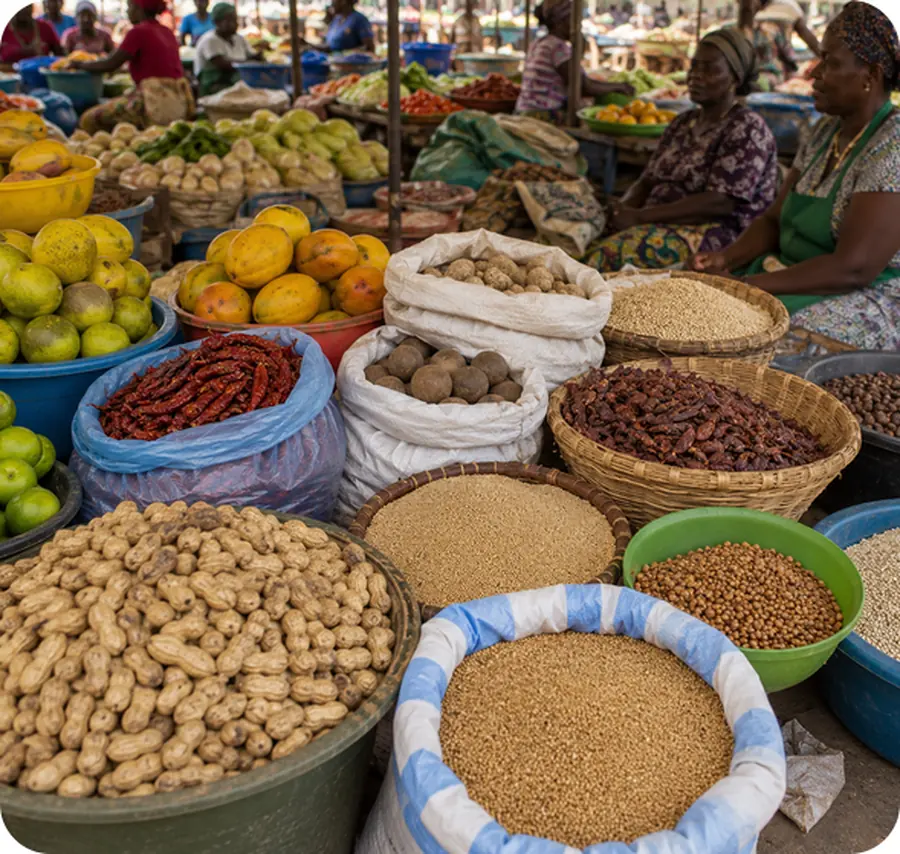
Kalinasho is structured like the supply chain it is replacing: contracted farmers at one end, national retail at the other, and our own certified production in between.
That structure is what lets us scale without losing control of quality, traceability or price.
A growing range
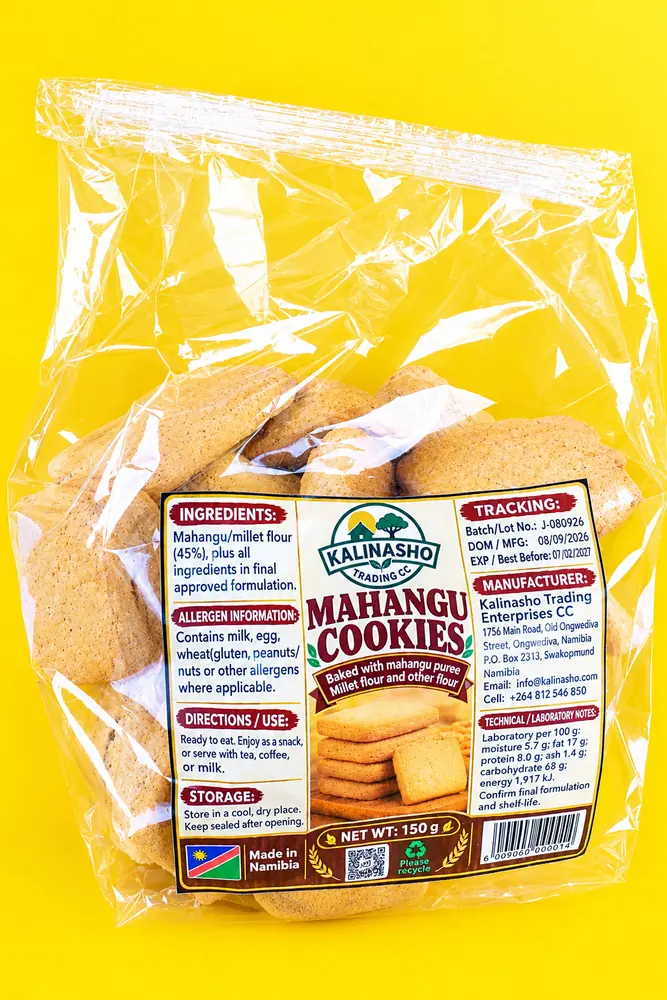
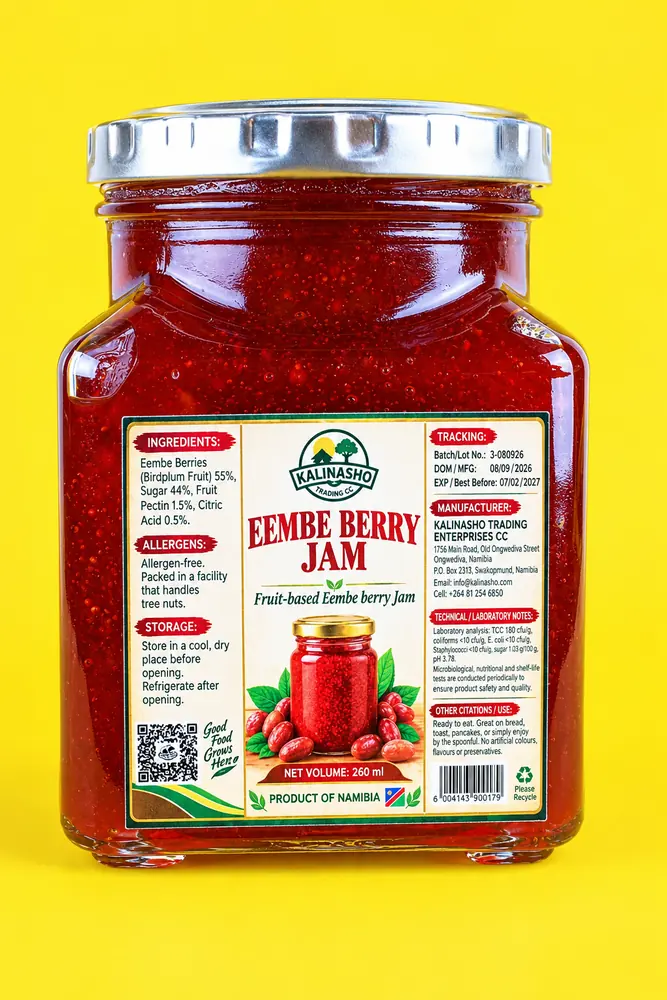
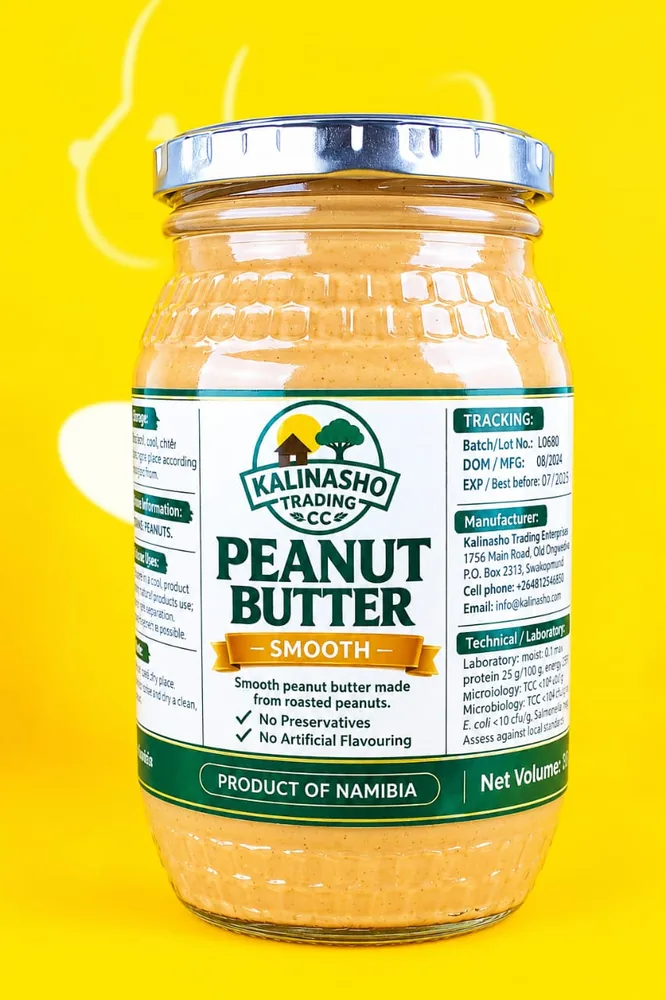
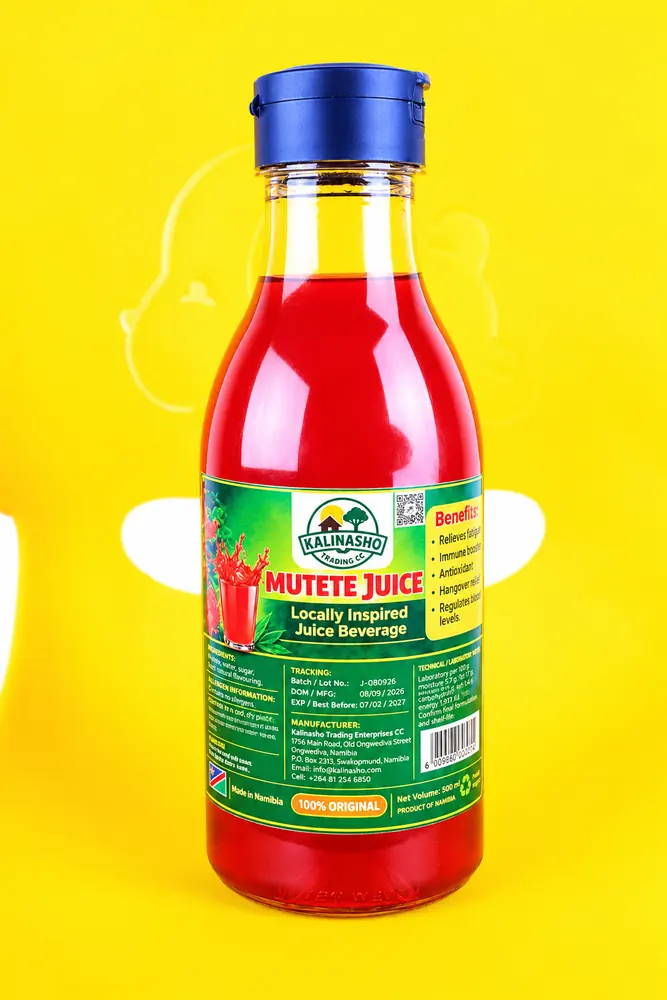
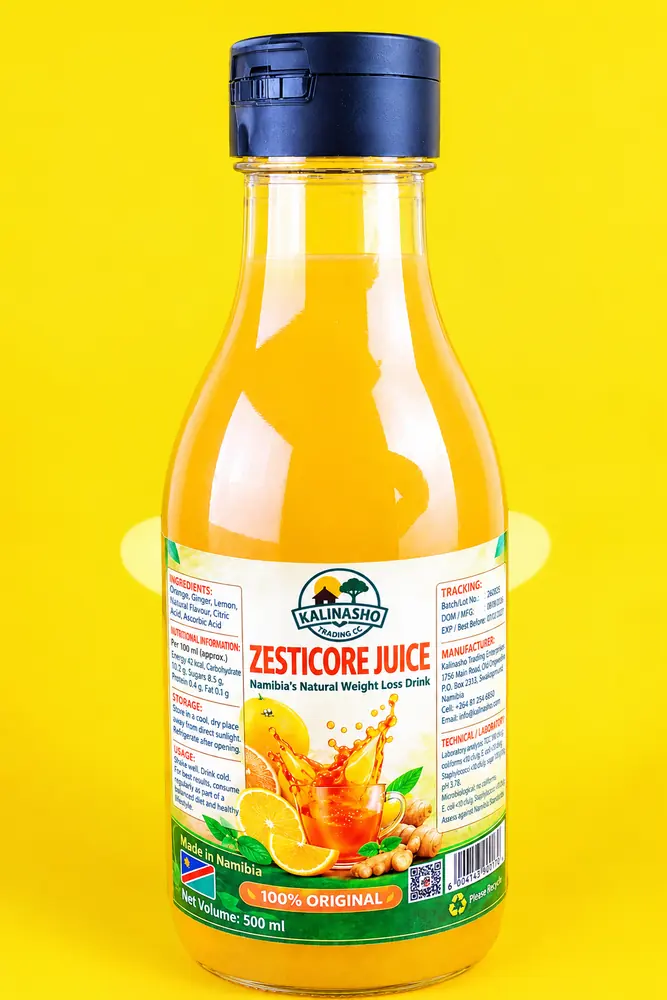
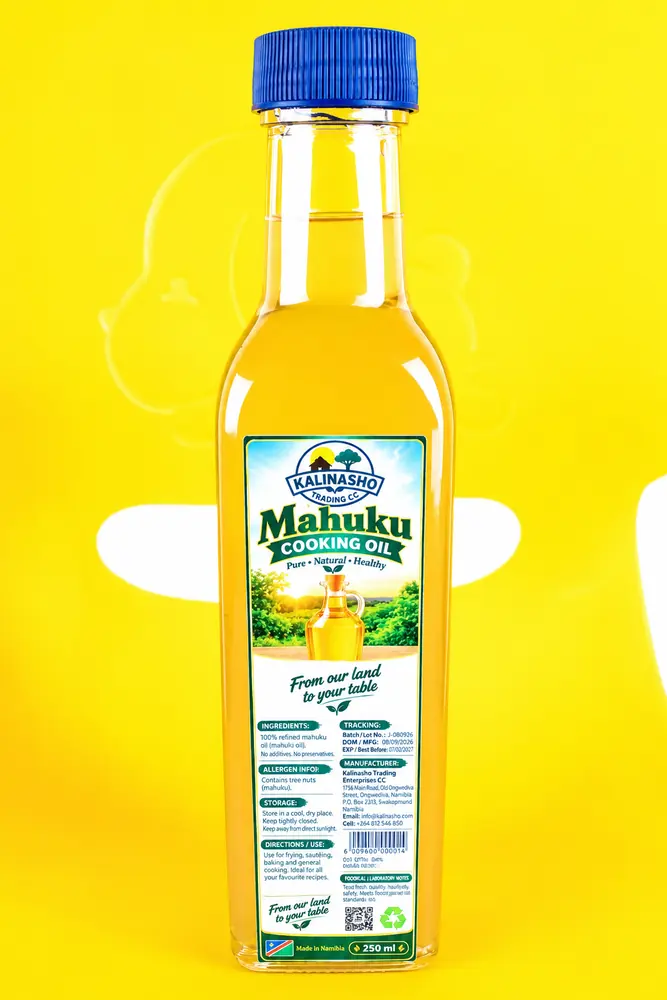
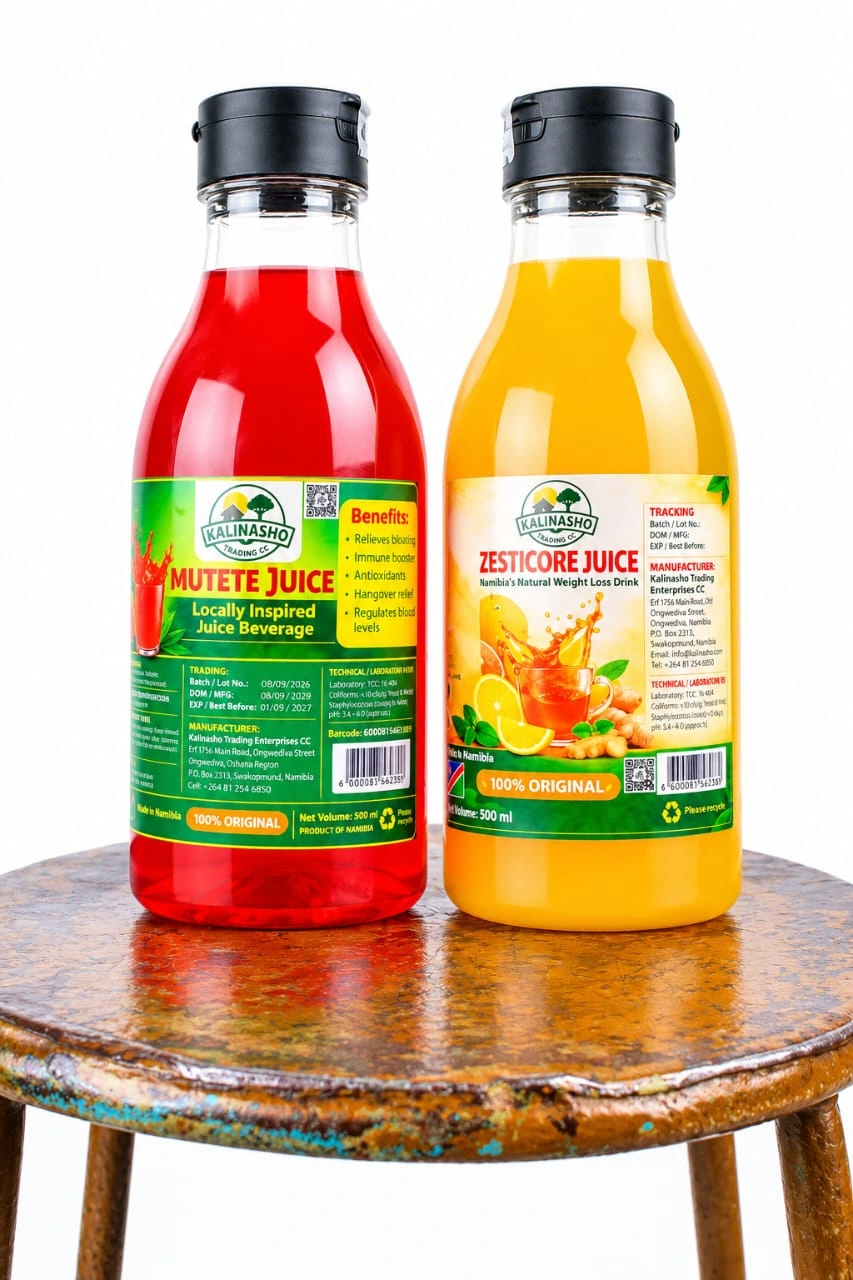
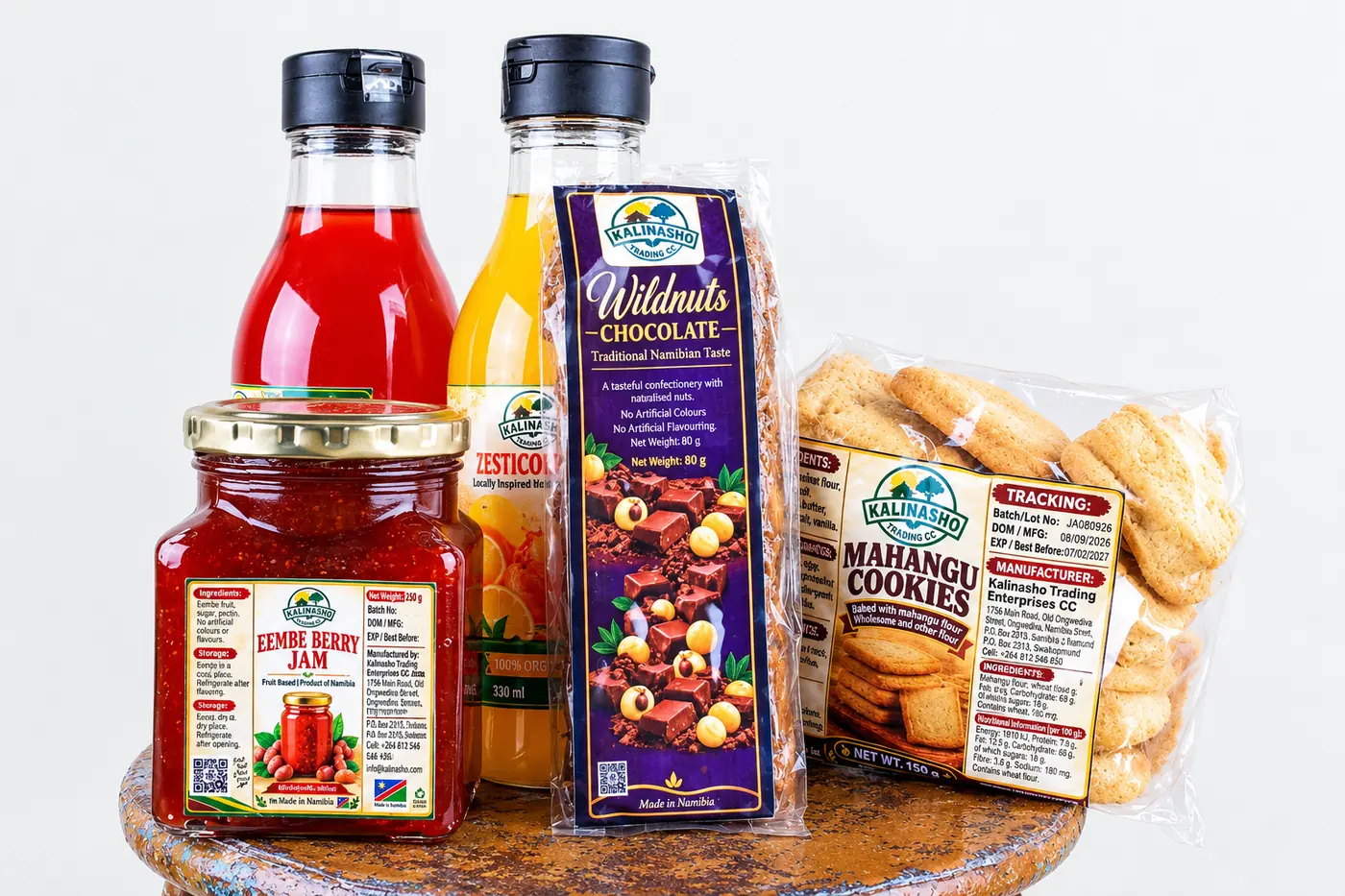
Eleven products across staples, spreads, beverages, cooking essentials, confectionery and personal care: mahangu millet flour, mahangu cookies, eembe berry jam, peanut butter, mutete and Zesticore juices, Mahuku cooking oil, chilli sauce, spice mix, wildnuts chocolate and HerbCrown hair oil.
Four routes to market
Retail.
Supermarkets and shops across Namibia.
Wholesale.
Bulk distributors supplying the wider trade.
Online.
Direct to consumers.
Government supply.
Schools and hospitals.
Priced to win
By sourcing locally and processing at home, we sell 15–20 per cent below comparable imported alternatives, with 100% natural, nutritious products and a safer supply than informal channels.
15–20%
below comparable imported alternatives
Who we serve
Households, particularly urban families, who want healthy, natural food with no artificial preservatives and no artificial sweeteners. And retail buyers who need reliable, retail-ready local products and an affordable alternative to imports.
The market
- N$162 million
- our serviceable obtainable market in Namibia
- N$1.2 billion
- the wider Southern African market
- N$260 billion
- the global organic foods market
Four forces are working in our favour: a government push for import substitution, retailers expanding local-sourcing programmes, SADC trade-agreement advantages, and a lasting post-COVID preference for local, traceable food. Our goal is to capture 15–20 of Namibia’s retailers within 12–18 months.
Why Kalinasho wins
Locked-in supply.
40 farmer contracts today, growing to 100–150.
Local benefits.
15–20% cheaper than imports and safer than informal supply.
Retail ready.
Certification, packaging and standards built in from the start.
Policy tailwinds.
Aligned with national import-substitution priorities.
Wide product variety.
One supplier for staples, spreads, drinks, sauces and more.
Impact that compounds
- SDG 2
Zero hunger
Post-harvest losses reduced by 15 per cent through better storage and processing.
- SDG 8
Decent work and economic growth
50+ farmers integrated, 30+ rural jobs created and 100+ women and young people trained.
- SDG 12
Responsible consumption and production
Eco-friendly packaging, less waste and climate-smart farming.
The road ahead
October–November 2026
Market expansion and product development.
November 2026–February 2027
Training 100–150 farmers.
March–April 2027
First business-to-business contracts with Shoprite, Spar, Model, OK and Metro.
By August 2027
More than 10,000 units sold, 30+ retail partners, 100–150 farmers in the network, and expansion into South Africa, Botswana, Belgium and Djibouti.